
County Harvest Festival Sermon
As we bring Suffolk’s harvest home today, as followers of Jesus in this place, may we notice and be thankful.

Sunday 15 November | Let us bear the light of Christ in Suffolk.
15 November 2026
St Edmundsbury Cathedral
St Edmund King and Martyr
Joanne Grenfell
Proverbs 20.28, 21.1-4,7; Rev 12.10-12a; Matt 10.34-39
If you’ve heard of Thomas Heywood previously, you might know him as one of the other playwrights churning out material for London theatres around the time William Shakespeare was making his name as England’s foremost dramatic author. But this morning, we will hear in the words of our anthem after communion part of one of his poems, The Search After God.
The verse that caught my imagination is this, as Heywood describes the hierarchies of heaven and the angels, and then comes to voice something revealed to him through the longing of his own heart, namely, where he might find God:
And now, my God, by thy illumining grace,
Thy glorious face And
(So far forth as thou wilt discovered be)
Methinks I see:
And though invisible and infinite;
To human sight
Thou in thy mercy, justice, truth appearest,
In which to our frail senses thou com’st nearest.
Mercy. Justice. Truth.
Heywood is right in the midst of the hustle and bustle of London. He’s writing plays at a furious rate. The printing press has turned access to knowledge on its head. Questions of nationhood, monarchy, and the common good are not just the stuff of politics, but are permeating the world of literature, entertainment, and culture. He’s living in the exciting, crowded streets of Clerkenwell – a place I know well – and becoming a bit of a name, as his plays gain interest and begin to earn him a decent living.
But here he is in poetry dwelling on human nature: the heart’s instability, the reality of sin, and the need for repentance. He’s aware of the restlessness of human thought and its tendency to vanity and error. He’s pointing towards the need for virtue and the source of such virtue in God.
As the turmoil of life seems to suggest that the end times are drawing nigh, Heywood responds first by trying to map out all the layers, levels, or hierarchies of how heaven is ordered, before concluding that, ultimately, God is simply known through the mercy, justice, and truth which he embodies and to which human beings are called to hold fast in the world.
I don’t think Heywood’s context or his answer are that different from our own. In every age there are battles for mercy, justice, and truth. These are battles in which we must all engage.
Who are we for this age? Where are mercy, justice, and truth to be found in Suffolk? How do they point us to a God who is faithful and in whom we can trust, even as war rages around the globe and its consequences are felt close to home in the division and hatred that it stirs up in our midst?
When the end times seem near, what is the light that we bear together?
I am coming to know Suffolk. I am already in love with Suffolk. I know that the sun rises first each morning on this beloved eastern county. I also know that the light we see here is not blinding flashes of brilliance, but a more equal, tenacious, resilient light. Our light holds steady even as the November days shorten, even as various kinds of darkness wrap their tendrils round the globe.
Suffolk people, I observe, match this steady eastern light. They – we – are not showy people, prone to ostentation or pretence. Instead, Suffolk people are stirred by deeper commitments, by faithfulness rooted in love. We seek the light that shines in each other, light which makes both its source and its power known through acts of mercy, justice, and truth. I think Thomas Heywood would find lived out here those same values which he saw in his own times to be truly of God.
I don’t know if the writer of Proverbs had Suffolk people in mind when they described how the Lord weighs the heart to discern the righteousness and justice which, we are told, are more acceptable to the Lord than sacrifice. But I’d like to think that we’d agree here that haughty eyes and proud hearts – described as “the lamps of the wicked” – are not how we are. They are both the opposite of the real, true light that shines brightly in our local communities through countless and often unseen acts of love, from one neighbour to another.
These acts of love extend beyond our immediate families or even neighbours. As Jesus teaches in Matthew’s gospel, when we become his disciples, we must be prepared to put aside all that is dearest to us and to lose our life. Our motivations are tested, pushed to the limits, as we learn no longer to rely on narrow definitions of family or belonging. Instead, we become members of the household of God. It is in this household that mercy, justice, and truth dwell. It is in this household that we find new life in Christ.
As we listen to Thomas Heywood fruitlessly trying to describe the hierarchies of heaven, and finding God instead in God’s mercy, justice, and truth, we might recall another attempt to carve up God’s love. It’s not that long ago that American Vice-President JD Vance set out his own hierarchy of love, ordered first in terms of family, then neighbours, then community, then country, and only then extending to the rest of the world.
But as both Pope Francis and Pope Leo firmly told him at the time, he was wrong. Charity never belongs only at home, and it does not inevitably lead us to prioritize domestic needs or to shut out those who are seeking support or asylum. Instead, God’s love is characterized by radical belonging, open to all people without exception. It is an infinite, boundless love, characterized by a light that spills over any borders that we might artificially create. It is a love that knows no hierarchy.
If each of us can gaze with love on the face of God and know that we are first gazed upon and loved beyond measure by the God who made us, then this changes everything about how we will act towards each other. Mercy, justice, and truth are how we acknowledge the love of God towards each of us: each known and loved by God, each honoured and respected by the other members of God’s household.
In Suffolk, these values are now being sorely tested. We see cuts to special educational needs provision, to school nursing, and to support for vulnerable young families. We hear increasingly fractious and dehumanizing rhetoric about refugees and asylum seekers, aimed at stoking outrage. We are in danger of refusing to see the light of Christ shining in those who are most marginalized. We are in danger of denying their full and God-given humanity.
I don’t envy any politician, local or national, trying to balance a limited budget in these globally difficult times. I pray for them all and encourage you to do so too. But if we are to bear the light of Christ together in this place, then we will need to pay better attention to mercy, justice, and truth.
Mercy, in seeing the vulnerability of those who have no families of their own to turn to, or who are displaced by war and conflict. Justice, in ensuring fair access to the law and proper processes for determining matters such as asylum claims. Truth, in speaking accurately, honestly, and moderately about locally contentious issues, and refusing to demonize or dehumanize those outside our own circles of culture and kinship.
God has no favourites. God appears to us all in mercy, justice, and truth. And membership of the household of God both offers to us and expects more of us than simply paying attention to our own selfish needs.
I am reminded of the description of St Edmund in one of the encyclopaedias of the saints, as “[showing] himself a model ruler from the first, anxious to treat all with equal justice, and closing his ears to flatterers and untrustworthy informers.”
As we celebrate Edmund’s feast day, and give thanks for his life and example, let us be committed in our own times to this equal justice, mercy and truth. Let our churches be places where relationships are built, local services supported, and difficult questions faced truthfully and with kindness. Let us be people who reject extremism, who welcome strangers in our midst, who turn fear mongering into peace making.
Let us bear the light of Christ in Suffolk, members together of a household without hierarchies, where mercy, justice, and truth are known, lived, and loved.
As we bring Suffolk’s harvest home today, as followers of Jesus in this place, may we notice and be thankful.
Harvest - thanking farmers for feeding the county.
Reflecting on Prison's Week
Bishop Joanne thanks the public sector across Suffolk
14 September 2026
3 September 2026
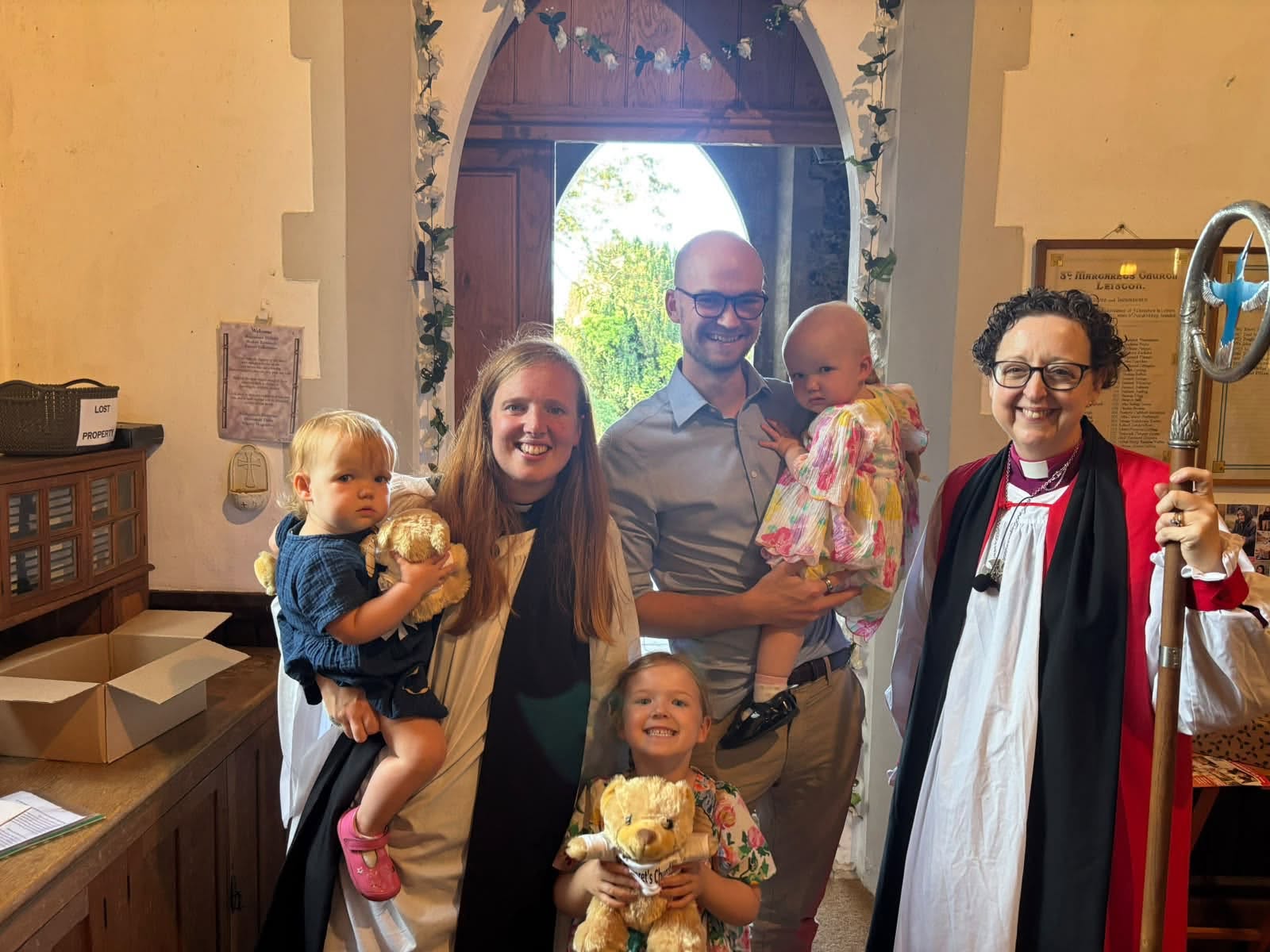
St Margaret of Antioch Leiston | 6 September 2026
The Rt Revd Dr Joanne Woolway Grenfell, Bishop of St Edmundsbury and Ipswich and a House of Lords member, said it was difficult to…
During August, many people will be looking forward to a holiday, a day trip, or simply a few days with…
Bishop Joanne writes… Earlier this month, I ate so many scones recently that I was “scone-fident” that I would soon look…