
Independent safeguarding audit
The intensive audit, conducted by the INEQE Safeguarding Group releases report

1 Samuel 3.1-10; Luke 7.36-50 “Speak, Lord, for your servant is listening.” We need to talk about wake-up calls. I don’t mean the kind of wake-up call that we arrange…
1 Samuel 3.1-10; Luke 7.36-50
“Speak, Lord, for your servant is listening.”
We need to talk about wake-up calls. I don’t mean the kind of wake-up call that we arrange in a hotel when we have a flight to catch and don’t want to miss it. I mean the kind of call that upends us where we are going wrong, brings clarity and discernment about what needs to change, and fires us up with new vision and new heart.
Samuel got a wake-up call as he slept in the temple of the Lord, near to the room of Eli, his mentor. Now, the word of the Lord was rare in those days, we are told. Even the temple leaders had stopped anticipating that God would show up, and Eli, Samuel’s mentor, no longer expected God to speak. So, there was no one even to teach Samuel what it could be like to know the promise that God has made to his nation to be with his people, now and through all generations.
And then there are also reasons why Samuel might not think that he was someone who God would speak to. Samuel knew he wasn’t an insider. He knew he didn’t belong in the temple, unlike Eli’s sons who had been born into that power and privilege, and who, like the people of Israel in that time, just did what was right in their own eyes.
But as he lay down in the darkness of the temple trying to drift off to sleep, God spoke to Samuel. Eventually, Samuel was ready to recognize him. And Samuel said, “Speak, for your servant is listening.”
Samuel’s experience reminds us that there are times across the globe, in any country, and indeed in any church, when the people stop listening for God, when those in power behave badly, when the poor, the vulnerable, and the outsiders are forgotten. In those times, God’s call is going to come, directly and repeatedly, to those who are willing to awaken, arise, and respond – even when the call feels uncertain and unfamiliar.
I think that we are in those times now. I believe that we are being called to listen out for and respond to the wake-up call of God.
We are being pulled into a new chapter of global war where perpetrators hide their aggression behind weasel words about regime change and defending international shipping routes. We are sliding further into a world where tech companies have a huge and often negative influence on the mental health of our young people and yet are allowed to hide behind notions of free speech. We are on the brink of assisted dying legislation that sells us a lie that dying should be managed swiftly and economically, rather than proper account being made of its true costs and of the value of loving, person-centred palliative care. There is plenty that the world needs to wake up to.
But if the church is going to help the world to wake up, then the church will first need to discern how it can wake up and find a new way of being. In this long night of the world’s indifference, are we ready to wake up and say for ourselves, “Speak, Lord, for your servant is listening”?
I notice something in each of the Old and New Testament readings about how God speaks. The first is that Samuel has to keep on getting up in the night. It’s not obvious at first who is calling him or what will be asked of him. He even has to ask Eli, who really isn’t the best of role models. But there’s no one else, so Eli will have to do. And gradually it becomes clear. “Speak, Lord, for your servant is listening”.
The second is how the woman in Luke’s gospel, having acknowledged her sin, goes on to worship and serve Jesus in the most shockingly intimate, yet also most loving and wholesome way imaginable. Those gathered around might be full of condemnation and more interested in the imagined detail of “who and what kind of woman” this might be. But she simply knows that as she is forgiven, she is seen and loved. As she serves, she is restored; as she is restored, she serves. Both her dignity and her identity are awakened. “Your faith has saved you; go in peace.”
I find this incredibly hopeful. We know that, for all our longing for it to be different, we’re often lost or uncertain, bumbling round in the dark, not knowing who we are, and not always knowing the one who is calling us.
We should acknowledge too that there is so much that we as a church have got wrong. We know that people have been hurt within the church and that we, collectively, institutionally, have often been too slow to admit what we’ve done wrong and to say sorry.
Perhaps we are being humbled. Why should the world listen to us, in all our brokenness? Who are we to ask for or offer wake up calls to anyone?
But God forgives us. God pours upon us his infinite grace and mercy. We are known and loved. And knowing that we are sinners, we are somehow able still to wash the feet of those in need, around our Suffolk communities, and assure them that they, like us, are seen and restored.
Luke writes of the woman, “Her sins, which were many, have been forgiven; hence she has shown great love.” I love how you can read that sentence around and around in endless circles. She has been shown great love because her sins have been forgiven; her sins have been forgiven because she has been shown great love. Grace flows around the circle of mercy.
And for us too: it’s not despite our many failings that we have been shown and can comprehend great love. It’s that, because of the abundance of our failings, we have even more experience of God’s grace.
Perhaps God is asking us now to wake up to the abundance of his grace. That would start with each one of us living free and forgiven lives, because we know Jesus as our Saviour. And it would flow onwards into a church that knows and shows what it looks like to be restored through grace.
What we do in ministry may often feel inadequate or insignificant. Like Samuel, we may feel we have little power or privilege, and that our ministry isn’t easily connecting with the lives that people lead today.
But in churches, day by day, your ministry is awakening people to the knowledge that God loves and forgives them. You don’t ask the kind of questions that the Pharisees, ask, about “who and what kind of people” these are. You just love them. And you create communities where people know that they can belong and serve – and wash other people’s feet, with dignity.
What you do is founded on the love that God has first shown you. That gives you a faith that can moves mountains and stand up to oppressors… and wash the feet of the poor and hungry and sit with the dying in their hour of need.
It’s not effort, though I know it sure feels like it. It’s grace.
Although this long night of the world’s indifference may feel very dark, and although the humbling of the church has been very deep, God’s grace is infinite. There is no part of our individual or collective lives that God’s grace cannot reach. And the more we fail, the more God’s grace is seen.
God will show us how we can wake up and serve, in new ways, with new humility. God will show us how to walk better paths, of peace, justice, and love. God will call us in ways that stir up every part of our humanity, even the parts of us that we are ashamed of.
And from that, God will show us how our lives may awaken others to the abundance of his grace.
All God asks of us is that we be ready to listen for and respond to this wake-up call of grace. And be ready to say, with Samuel, “Speak, Lord, for your servant is listening”
The intensive audit, conducted by the INEQE Safeguarding Group releases report

Bishop Joanne writes for the East Anglian Daily Press September 2026
14 September 2026
3 September 2026
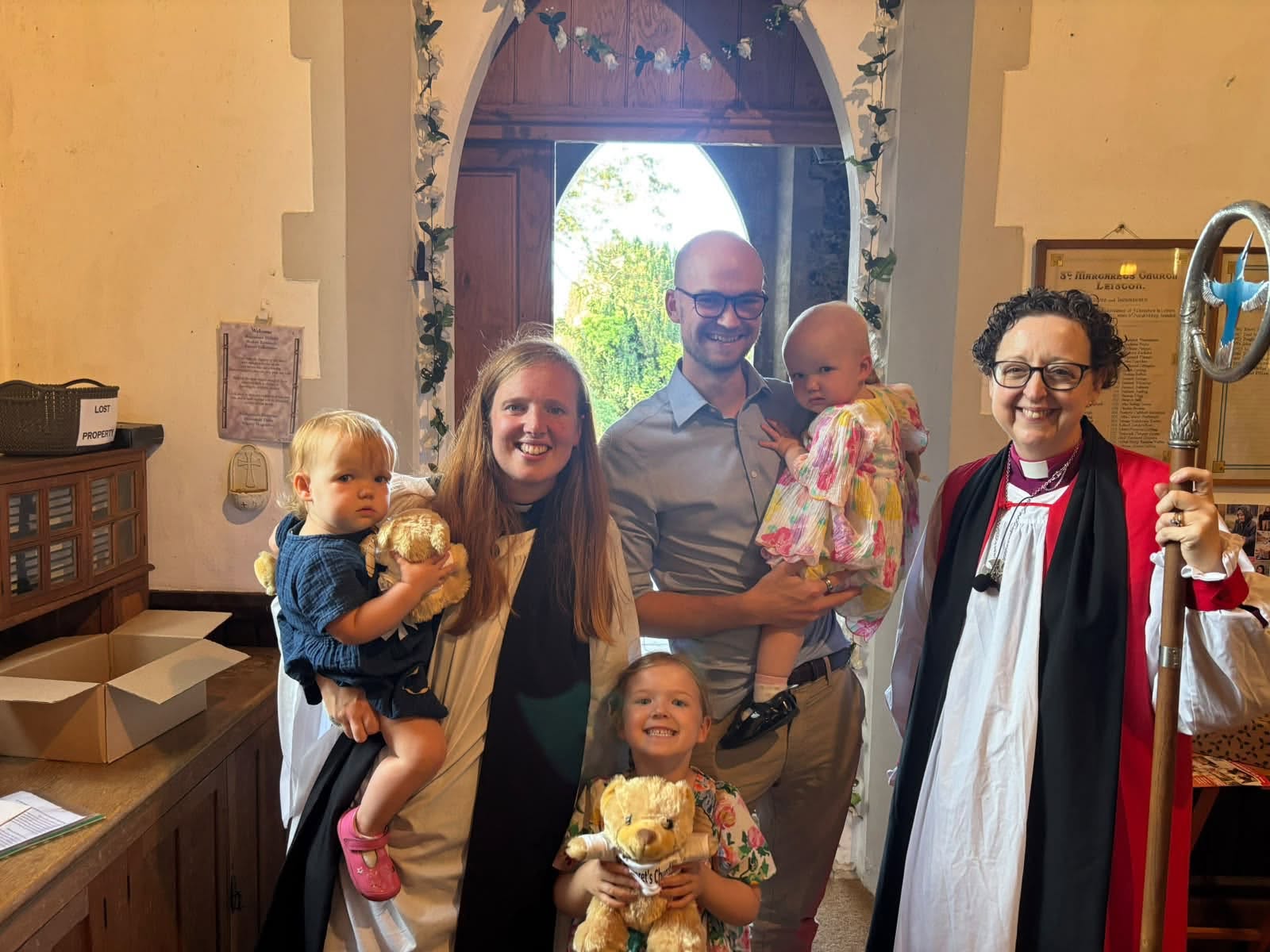
St Margaret of Antioch Leiston | 6 September 2026
The Rt Revd Dr Joanne Woolway Grenfell, Bishop of St Edmundsbury and Ipswich and a House of Lords member, said it was difficult to…
During August, many people will be looking forward to a holiday, a day trip, or simply a few days with…
Bishop Joanne writes… Earlier this month, I ate so many scones recently that I was “scone-fident” that I would soon look…
Following the arrest of 12 people with the possible threat to the UK Ijtima event at Shrubland Hall, in Barham. The…
Bishop Joanne writes… I suffer from quite bad dizzy vertigo. It’s not actually a very serious condition and it…