Bishop Joanne thanks the public sector across Suffolk
Bishop Joanne writes for the East Anglian Daily Press September 2026
Bishop Joanne writes… I suffer from quite bad dizzy vertigo. It’s not actually a very serious condition and it can be well managed. But it’s really scary when it…
Bishop Joanne writes…
I suffer from quite bad dizzy vertigo. It’s not actually a very serious condition and it can be well managed.
But it’s really scary when it happens.
During the years it has sometimes made me quite nervous about preaching and leading big services, in case the world starts to spin around when I’m speaking, and tue congregation think that I’ve polished off the communion wine.
I don’t mind you knowing that – about the dizzy head, that is.
God didn’t make me physically perfect. It’s good for me to remember that with humility on the days when I’m feeling invincible and what my children call “bishopy” and when I might otherwise be a little insensitive to the anxieties that other people are understandably carrying.
God’s story isn’t a story of perfect people. It’s a story of love, and God uses me – and you – to tell it, dizzy heads, and all.
This feels like something that is worth holding onto as we all listen and discern what God is calling us to be within Suffolk.
As Christians we believe that we have a gospel worth sharing, a gospel which offers hope to the world.
We can offer that confidently – because of our faith in God – but we will need also to offer it with humility, because we know that we are frail human beings and our Church is fragile too.
At the heart of all our work is the matter of calling: who is God calling us to be?
I am keenly looking forward to the services of ordination which will take place in the cathedral at Bury St Edmunds, my first in Suffolk.
More than 20 men and women, of all ages and backgrounds, are answering their own calling as the are ordained as new deacons and priests to serve villages and towns right across Suffolk.
These men and women come from all different backgrounds, including nursing, agriculture, business and art, and will make a real difference in our communities as they serve alongside our lay people and clergy.
Deacons and priests commit to telling the story of God’s love.
During their journey, I have the opportunity to meet with each of the ordinands. I don’t consider myself to have any great words of expertise or wisdom, but I am a pilgrim on the journey of faith too. So, I hope we will reflect and learn together.
I will speak to them of their role to proclaim the gospel, and to watch for signs of the work that God is doing around us.
I’ll also remind them of some specific roles, baptising, teaching, praying, ministering to the sick and dying, building up the Church – and, as priests or bishops, presiding, marrying, and blessing.
We’re here to tell and to keep retelling the story of God’s love. We want to do nothing less than share the story of salvation with the whole world.
It will have to be told not through any kind of classic leadership style or management task, but in the way that we live our lives, through the people we already are, and through the people we become, as we are further shaped by God.
To do that, we will need to find strength of character and wise belonging in our community, and, of course, the grace of God which goes before and after us and is ever present all around us.
The role of clergy has certainly changed and been challenged in recent years. We are living in a time when deference to clergy has, rightly, diminished. The assumption that ordained ministers should be placed on a pedestal – or beyond question – is no longer sustainable, nor should it be.
The Church has learned, often painfully, that unchecked authority can lead to harm. There are devastating consequences when power is misused or accountability is absent.
Part of my role, therefore, is to help our new deacons and priests being ordained this month to think differently about how they carry authority. I can only do that by modelling a different approach myself.
The first letter of Peter, chapter 5, verse 4, tells its hearers to “clothe yourselves with humility.” To be an example of humility, we have to start by admitting our fears and vulnerabilities, and, when it’s appropriate, sharing them wisely.
So, when I speak to our ordinands, I intend to try to do some of that. And it feels appropriate to share some of that with you too.
I am not perfect and I will get things wrong, I am open to being challenged, and I expect to be held to account. Accountability is not a burden to be resisted; it is a gift.
The flourishing of the Church depends on the gifts of all its members, lay and ordained. I give thanks for all the faithful disciples, imperfect and yet wonderfully made people, who tell the story of God’s love across Suffolk.
There’s so much that we can do together with God.
Wherever God is leading us next, all things are possible in his love.
Bishop Joanne writes for the East Anglian Daily Press September 2026
14 September 2026
3 September 2026
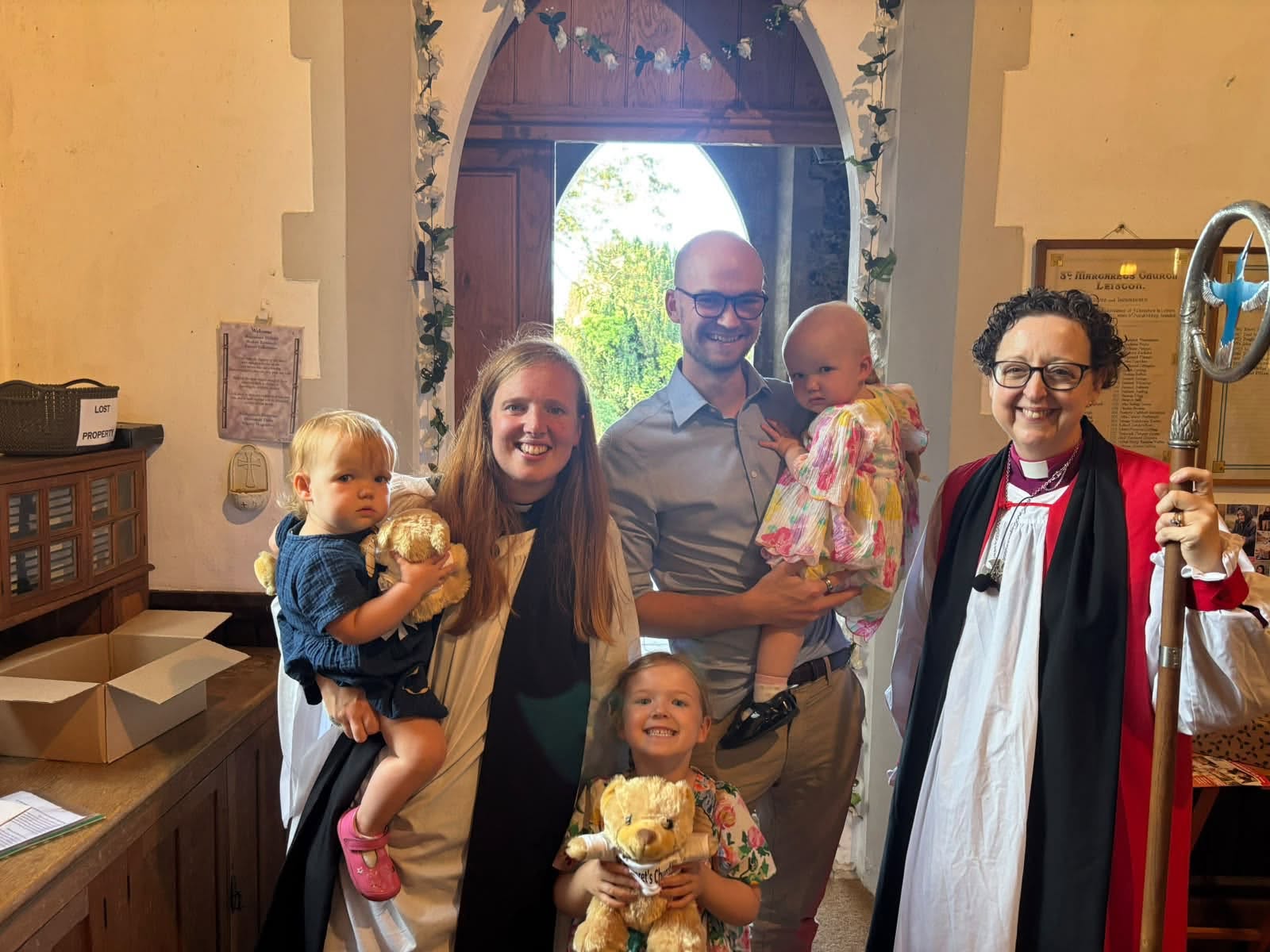
St Margaret of Antioch Leiston | 6 September 2026
The Rt Revd Dr Joanne Woolway Grenfell, Bishop of St Edmundsbury and Ipswich and a House of Lords member, said it was difficult to…
During August, many people will be looking forward to a holiday, a day trip, or simply a few days with…
Bishop Joanne writes… Earlier this month, I ate so many scones recently that I was “scone-fident” that I would soon look…
Following the arrest of 12 people with the possible threat to the UK Ijtima event at Shrubland Hall, in Barham. The…
As Bishop of St Edmundsbury and Ipswich, I have the privilege of serving alongside clergy and congregations in Anglican parishes…
Sometimes, we need to listen to our wake-up calls. I don’t mean the kind of wake-up call that we arrange…